If you're planning to fly with your pet, you've come across the term IATA rules, and the rules are not at all easy to understand. Don't worry, Mr n Mrs Pet relocation experts are here to tell you what it means and why it is so important for pet parents.
IATA stands for the International Air Transport Association, the global body that sets standards for safe and smooth air travel. Every airline, whether domestic or international, follows IATA guidelines to ensure that pets travel comfortably, securely, and without risk.
In 2025, the rules remain globally standardised but are reviewed and updated regularly. For pet parents, this means you need to understand and follow these rules before booking your pet's ticket. This guide explains the rules in simple language so you can travel with peace of mind.
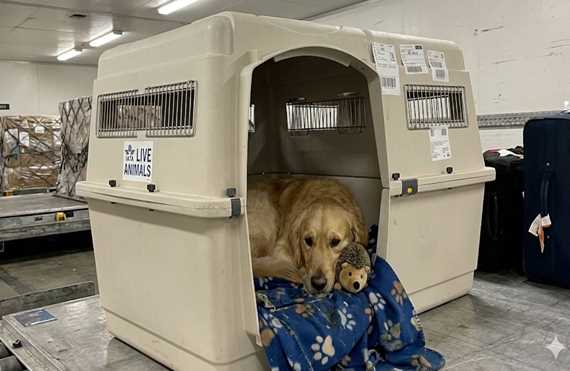
What Are the IATA Pet Travel Rules?
In simple terms, IATA rules are international guidelines for pet travel by air.
-
Who they apply to: Airlines, cargo operators, and pet owners.
-
Why they matter: To ensure pet safety, comfort, and airline acceptance worldwide.
-
Purpose: To standardise pet travel so your furry friend can fly across countries without unnecessary hurdles.
If you don't meet IATA standards, airlines may refuse to carry your pet, which is why knowing them is non-negotiable.
IATA Pet Travel Guidelines
Here are the main rules broken down into easy-to-understand points:
Approved Pet Carriers
-
Size: The carrier must be big enough for your pet to be able to stand, sit, lie down, and turn around comfortably.
-
Material: Carriers should be rigid (plastic, fibreglass, metal, or wood). Soft bags are not allowed in cargo.
-
Ventilation: At least three sides must have ventilation holes.
-
Base: The bottom must be leak-proof with absorbent bedding.
-
Extras: Food and water containers must be securely attached.
Tip: Always buy an IATA-approved carrier. Many pet parents buy one that looks fine, but gets rejected at the airport.
Weight & Size Restrictions
-
Cabin: Most airlines allow small pets in the cabin if their total weight (pet + carrier) is up to 5-10 kg.
-
Cargo: Larger pets must travel in the temperature-controlled cargo hold.
Pet Age Requirements
-
Domestic flights: Minimum 8 weeks old.
-
International flights: At least 16 weeks old, since rabies vaccination must be valid before travel.
Documentation Required
-
Health certificate (issued within 48-72 hours of travel).
-
Vaccination records (especially rabies).
-
Import/export permits depending on the destination country.
-
The destination requires a microchip certificate.
Feeding & Watering
-
Carriers must have attached food and water bowls.
-
Use a water bottle or tray that can be filled without opening the carrier.
Labeling & Identification
-
The carrier must clearly show your pet's name, owner's details, and emergency contact.
-
"Live Animal" stickers must be placed on the carrier.
Breed Restrictions
Some airlines do not allow brachycephalic breeds (snub-nosed pets) due to breathing risks. These include:
-
Dogs: Pugs, Bulldogs, Shih Tzus.
-
Cats: Persian, Himalayan, Exotic Shorthair.
Why Following IATA Rules Is Important
-
Airlines will refuse check-in if the carrier or documents don't meet standards.
-
Prevents stress or injury during travel.
-
Makes international relocation smoother, avoiding delays or quarantine issues.
-
Increases your pet's comfort and security.
At Mr n Mrs Pet (MMP), we help families prepare pets exactly as per IATA rules so they don't face last-minute surprises at the airport.
Common Mistakes Pet Parents Make
-
Buying a carrier that's too small.
-
Not checking breed restrictions in advance.
-
Getting health certificates too early (must be within 48-72 hrs of travel).
-
Forgetting airline-specific rules (IATA is global, but each airline may add extra conditions).
Tips to Prepare Your Pet for IATA-Compliant Travel
-
Familiarise your pet with the carrier at least 2-3 weeks before travel.
-
Practice short car rides in the carrier so pets feel safe.
-
To ease anxiety, include a comforting blanket or toy.
-
Ensure your pet is well-hydrated but not overfed before flying.
Flying with your pet doesn't have to be stressful if you follow IATA's global guidelines. The rules may seem detailed, but they exist to keep pets safe and comfortable during travel.
If you're unsure about paperwork, carriers, or breed restrictions, don't risk it, work with experts like Mr n Mrs Pet; we handle end-to-end pet relocation services across India and abroad. That way, your furry friend can fly as safely as you do.