Heatstroke in dogs is something a lot of pet parents don't take seriously until it actually happens. And by the time it does, things can get scary very fast. Indian summers can be brutal, and dogs don't really have an efficient way to cool themselves down. They rely mostly on panting, and when the heat is too much, that just isn't enough.
That's why knowing the early signs and what to do in that moment really matters. It's not just helpful; it can genuinely save your dog's life.
Let's break it down in a simple, practical way.
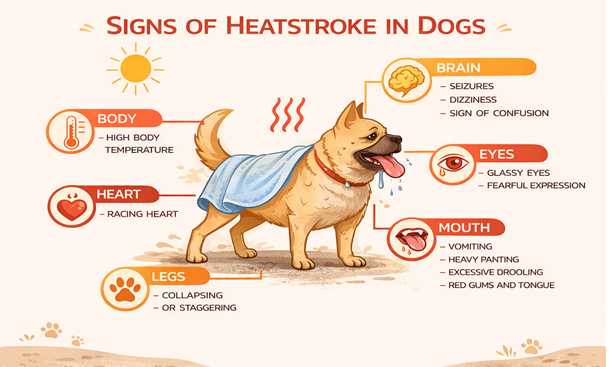
What exactly is heatstroke in dogs?
A dog's normal body temperature is around 38 to 39 degrees Celsius. When it starts going beyond that and crosses 40 degrees, it becomes dangerous. The body basically loses its ability to cool down, and internal organs start getting affected.
This can happen more easily than people think. Leaving your dog in a parked car, taking them out for a walk in the afternoon heat, or even keeping them in a poorly ventilated room can trigger it.
Some dogs are at higher risk. Flat-faced breeds like pugs, overweight dogs, older dogs, puppies, and dogs with thick coats tend to struggle more in heat.
Signs of heatstroke in dogs
Heatstroke doesn't usually come out of nowhere. It builds up gradually, and if you're paying attention, your dog will show signs before things get serious.
Early signs you might notice
-
Heavy, continuous panting that doesn't slow down even after rest
-
Excessive drooling, sometimes thicker or stickier than usual
-
Tongue and gums turning unusually bright red
-
Warm ears and body when you touch them
-
Restlessness, pacing, or not being able to sit still
-
Constantly looking for cooler spots like tiles, shaded corners, or under furniture
-
Drinking more water than usual
At this stage, your dog is already struggling with the heat, even if it doesn't look alarming yet.
Moderate symptoms as the condition worsens
-
Vomiting, sometimes repeatedly
-
Diarrhoea, which may occasionally contain blood
-
Noticeable weakness or low energy
-
Unsteady walking or stumbling, like they're losing balance
-
Refusal to move or get up
-
Dry or sticky gums instead of the usual moist feel
-
Faster heart rate and heavier breathing
-
Eyes may look dull, tired, or slightly glazed
This is the point where many pet parents realise something is wrong, but it's already quite serious.
Severe symptoms that indicate an emergency
-
Collapse or inability to stand at all
-
Seizures or uncontrolled muscle shaking
-
Loss of consciousness or unresponsiveness
-
Very pale, bluish, or even greyish gums
-
Irregular or laboured breathing
-
Extremely high body temperature
-
Complete disorientation, not recognising surroundings
At this stage, heatstroke has turned into a life-threatening emergency. Immediate cooling and urgent veterinary care are necessary.
The key thing to remember is that these stages can progress very quickly, sometimes within minutes, especially in extreme heat. Even if your dog starts with just mild panting, it's always safer to act early rather than wait for things to get worse.
How to calm a dog immediately in heatstroke
The first thing is to stay calm and act quickly. What you do in the first few minutes really matters.
Move your dog to a cooler place
-
Take them out of the heat immediately
-
Bring them indoors with a fan, cooler, or AC if possible
-
If indoors isn't available, place them in a shaded, well-ventilated area
Start cooling gradually
-
Use cool water, not ice-cold
-
Pour it slowly over the body
-
Focus on the belly, neck, inner thighs, and paws
-
You can use a wet cloth, just keep it cool
Improve airflow
-
Place your dog near a fan or in a breezy spot
-
Airflow helps bring the temperature down faster
Offer small amounts of water
-
Let them take small sips if they're alert
-
Don't force water, especially if they seem weak
Monitor temperature if possible
-
Check every few minutes if you have a thermometer
-
Stop active cooling around 39–39.5°C
Visit a vet immediately
-
Even if your dog seems better, don't skip this
-
Internal damage isn't always visible right away
Check the detailed guide to keep dogs cool in the summer.
Things you should avoid doing
A lot of people panic and accidentally make things worse.
-
Don't use ice or ice water. It might seem like the fastest way to cool your dog, but it can actually trap heat inside the body and cause shock.
-
Don't wrap your dog in thick wet towels and leave them like that. It can hold the heat in instead of releasing it.
-
Don't force water into their mouth, especially if they are weak or unconscious. And don't wait it out, thinking they'll recover on their own.
How to prevent heatstroke in the first place
Prevention is honestly much easier than dealing with an emergency.
-
Try to avoid taking your dog out during peak heat hours, especially between late morning and late afternoon. Early mornings and evenings are much safer.
-
Always make sure they have access to clean, cool drinking water. In summer, it helps to keep multiple bowls around.
-
Keep your home ventilated. Fans, coolers, or air conditioning can make a big difference.
-
Never leave your dog in a parked car, even for a few minutes. The temperature inside can shoot up very quickly.
-
You can also use cooling mats or damp towels for them to lie on—even small things like letting them rest on a cool floor help.
And during really hot days, don't push them to exercise or play too much. Feed a summer-appropriate diet to keep them healthy during summer.
Final thought
If you found this helpful, don't wait for an emergency to learn these basics. Staying informed is one of the best ways to keep your dog safe, especially during harsh summers.
For more practical pet parenting tips, seasonal care guides, and easy-to-follow advice, keep exploring our blogs. Whether you're a new pet parent or have had dogs for years, there's always something useful to learn.
And if you ever feel unsure about your dog's health, behaviour, or daily care, it's always better to seek professional help than guess. The right guidance at the right time can make all the difference.
Stay aware, stay prepared, and give your dog the care they truly deserve.
Frequently Asked Questions
What is heatstroke in dogs?
Heatstroke is a serious condition where a dog's body temperature rises beyond normal, and they are unable to cool themselves down. It usually happens due to high temperatures, lack of ventilation, or overexposure to heat. If not treated quickly, it can lead to organ failure and can be life-threatening.
What are the early signs of heatstroke in dogs?
Early signs include heavy panting, excessive drooling, bright red gums, restlessness, and seeking cool places. At this stage, your dog is already feeling the heat and needs immediate cooling.
Is heatstroke preventable?
Yes, in most cases, it is completely preventable. Avoid peak heat hours, keep your dog hydrated, ensure proper ventilation, and never leave your dog in a parked car. Simple precautions can go a long way in keeping your dog safe.
Can heatstroke happen indoors?
Yes, it can happen indoors if the space is poorly ventilated, very humid, or lacks cooling. Dogs kept in closed rooms without fans or airflow are also at risk.
How do I know if my dog is dehydrated?
Common signs include dry or sticky gums, excessive panting, sunken eyes, and low energy. In severe cases, the skin may lose elasticity. Dehydration often goes hand in hand with heatstroke.
Are some dog breeds more prone to heatstroke?
Yes, flat-faced breeds like Pugs and Bulldogs are more at risk because they have difficulty breathing efficiently. Overweight dogs, puppies, and older dogs are also more vulnerable.
Is panting always a sign of heatstroke?
Not always. Dogs pant to cool themselves normally. But if the panting is excessive, continuous, and combined with other signs like drooling, weakness, or vomiting, it could indicate heat stress or heatstroke.
Can dogs recover from heatstroke at home?
Mild heat stress can sometimes improve with quick cooling at home, but heatstroke is not something you should rely on home treatment for. Even if your dog seems better, internal damage may still be happening. It's always safest to visit a vet.