Many pet parents wonder whether train travel is safe for dogs in India. The short answer is yes, but it is not as simple as travelling with your dog in your personal vehicle. Indian Railways has clear restrictions on where dogs can travel, what documents are needed, and how the booking must be done.
This blog explains the rules, safety concerns, preparation steps, and tips to help you decide whether train travel is a good choice for your dog.
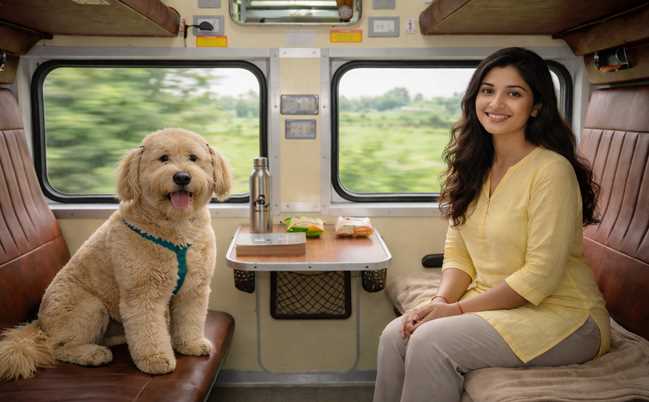
Are dogs allowed to travel on trains?
Yes, dogs are allowed to travel by train in India, but only under specific Indian Railways rules. In general, they can travel with owners in AC First Class or First Class only when the entire 2-berth coupe or 4-berth cabin is booked under a single PNR. They can also travel separately in the luggage-cum-brake van dog box under supervision.
Dogs are not allowed in AC 2-tier, AC 3-tier, AC Chair Car, Sleeper Class, or Second-Class compartments. If a passenger carries a dog without proper booking, Indian Railways can levy a penalty.
Train travel options for dogs
There are two main ways to travel with a dog by train in India.
First AC coupe or cabin: The first option allows the dog to travel with their parent, where the dog travels inside a fully reserved First AC coupe or cabin with the family.
Luggage/Brake van: The second is the dog-box option, where the pet travels in the brake van and is supervised by the Train Manager or Guard.
The First AC option is usually more comfortable for dogs because they stay close to their owner. The brake van option may be practical, but it is more stressful because the dog travels separately, and the owner cannot sit there throughout the journey.
Is train travel safe for dogs?
Yes, travelling with a dog by train in India can be absolutely safe if the trip is planned correctly. But still, several factors affect safety: planning of the trip, weather conditions, route choice, and behaviour of the dog.
It is best to take the First AC because there you will have privacy, comfort, and fewer people on board. Brake van can also be safe,e but not recommended if your dog suffers from stress, if it is young, old, and if it requires medical attention, because otherwise the trip can turn out to be risky due to several factors such as overheating, dehydration, and inability to provide immediate assistance in case something goes wrong.
Train ticket booking process for dogs and documents required
-
First, you need to book your own entire 2-berth coupe or 4-berth cabin ticket in First Class AC compartment through IRCTC or the railway counter. Only the first AC allows pets to travel with owners in the cabin.
-
After booking, send a request letter to the Chief Commercial Officer of the boarding station headquarters 1-7 days before travel.
-
In the request letter, mention:
- PNR - Train number and date - Number of passengers - Reason for requesting a coupe - Add a clear note that you are travelling with a pet dog/cat
-
Remember that a coupe is not guaranteed, but many pet parents get it if they apply early and correctly.
Documents required on the day of travel
-
If doing online, use the "Dogs/Cats Booking" option under the "Trains" menu on IRCTC after the first chart is prepared.
-
Reach the railway parcel office 2-3 hours before departure if doing it offline, and carry these documents:
- Fit-to-travel certificate from a vet. - Updated vaccination record. - Your train ticket and PNR printout. - Owner's ID proof. - Copy of the coupe request letter, if available.
-
A "Luggage Ticket for Dog/Cat" is handed over at the parcel counter. Charges (Approx.):
- AC First Class: ₹350-₹600 - Brake Van Payment: ₹500-₹1500 in case of weight & distance depending on one another
-
Keep photocopies of all documents ready for quick checking.
Vet Certificate Requirements
-
The vet certificate should be issued 24-48 hours before travel.
-
It should confirm that the pet is:
-
Healthy.
-
Free from infectious diseases.
-
Vaccinated.
-
Fit for train travel.
-
The anti-rabies vaccination record should be updated and available.
Pet Booking and Fees
-
Get the luggage ticket for the dog/cat from the parcel counter at the railway station.
-
Pet travel charges are usually paid there and generally in cash.
-
The fee may vary depending on class, weight, and distance.
How to prepare your dog for travel
Preparing in advance will not only ensure that your journey is a safe one but will also allow you to go through the process easily. Consult a veterinarian beforehand, make sure that you have the fitness certificate and the vaccinations of the animal on hand, get your dog accustomed to walking on a leash and in a cage, pack enough drinking water, light food, poop bags, and an object that will keep your dog comfortable.
Additionally, you can opt to arrive at the train station a bit early since dealing with the procedures related to pets may take up a lot of time.
Safety tips
A few simple steps can reduce stress during the journey. Do not feed a heavy meal right before departure, because motion and heat can cause discomfort. Keep your dog hydrated, especially on long routes or warm days.
Choose cooler travel hours when possible, and avoid very long journeys if your dog is not used to travel. If your dog is nervous or reactive, First AC is a better choice than the brake van.
Also, remember that if fellow passengers object to the dog in the compartment, railway staff may remove the dog to the Guard's van without refund. That makes planning and booking especially important.
Conclusion
Dogs are allowed to travel by train in India, but only under strict railway rules. If you choose the right class, prepare the documents, and plan for your dog's comfort, train travel can be a safe and manageable option.
For most pet owners, the best experience comes from travelling in First AC with the entire coupe or cabin booked, because it offers more comfort and less stress than the brake van option.
You don't have to take the pressure alone for travelling with your pet via train, seek professional help with Mr n Mrs Pet experts, who can guide you throughout the process and help you get all the documents required for the train travel of your pet.
FAQ section
Can I take my dog with me in a sleeper class or the general compartment of a train in India?
No, dogs are not allowed in regular compartments like Sleeper, AC 2-tier, or AC 3-tier. They are only permitted in First AC (with a full coupe/cabin booking) or in the brake van.
Is it compulsory to book an entire coupe in First AC to travel with a dog?
Yes, in most cases, you need to reserve the full coupe or cabin under one PNR. Without this, your dog may not be allowed to stay with you.
What happens if other passengers complain about my dog?
If co-passengers object, railway authorities can shift your dog to the brake van, even if you initially had them in your cabin.
Is the brake van safe for dogs during train travel?
It can be safe if properly managed, but it is usually more stressful since dogs travel separately with limited owner access.
What documents are required for travelling with a dog by train?
You need a fit-to-travel certificate, vaccination records (especially anti-rabies), your ticket and PNR, ID proof, and the pet's luggage ticket.
How early should I reach the station with my dog?
It is recommended to arrive at least 2–3 hours before departure to complete pet booking and parcel office formalities.
Can I book my dog's train ticket online?
Yes, you can use the IRCTC "Dogs/Cats Booking" option after chart preparation, but many people still complete the process offline at the station.
How much does it cost to travel with a dog on Indian Railways?
Charges usually range from ₹350 to ₹1500 depending on class, distance, and whether the dog travels with you or in the brake van.
Should I sedate my dog for train travel?
No, sedation is generally not recommended unless specifically advised by a vet, as it can cause health risks during travel.
What is the best way to make train travel comfortable for my dog?
Choose First AC when possible, carry familiar items like blankets, keep your dog hydrated, avoid heavy meals before travel, and ensure they are crate-trained.
Can puppies or senior dogs travel by train safely?
They can, but extra care is needed. Very young, elderly, or medically sensitive dogs are better suited for shorter journeys or alternative travel options.
What if my dog gets anxious during the journey?
Familiar items, calm behaviour from you, and proper preparation help. For highly anxious dogs, train travel, especially the brake van, may not be ideal.